
California Jail Mugshots
Booking-photo access in California is a local records issue, not a statewide gallery. The research file shows that county jail rosters differ across the state. Some counties publish a current inmate search with photos. Some publish booking reports, in-custody logs, or person-search pages without a photo field. Some route the public to VINE for custody status. Others require a sheriff, county, or local corrections records request when a photo or older booking record is not visible online.
California's statewide arrest-information rule is Government Code section 7923.610.
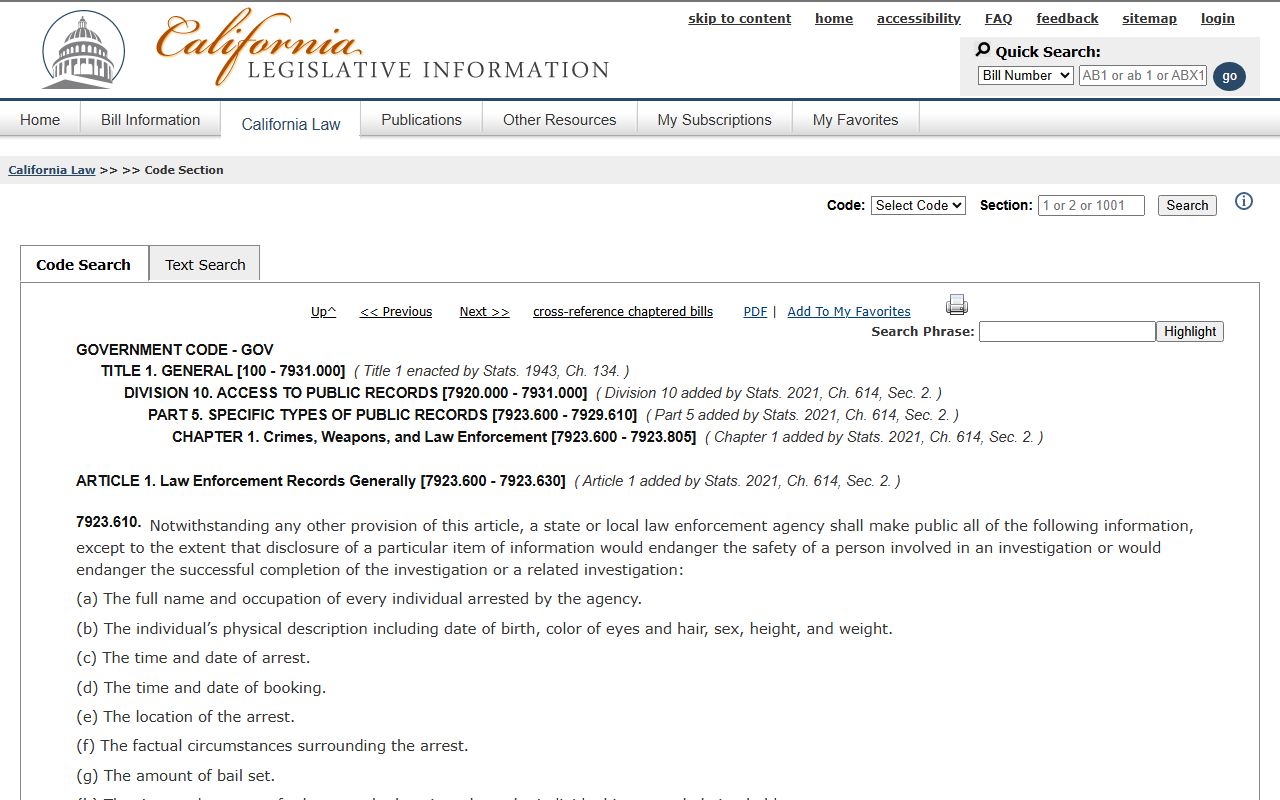
The statute screenshot connects mugshot access to the same arrest-information framework that governs booking data.
That statute requires specified arrest information to be public unless disclosure of a particular item would endanger a person involved in an investigation or the successful completion of an investigation or related investigation. The listed public information includes name, occupation, physical description, arrest and booking timing, arrest location, factual circumstances, bail amount, and release or current holding-location information. The research also notes limits for juvenile records, medical and mental-health information, victim data, sealed records, investigative records, security information, local summary criminal history, and booking photographs.
Find California Booking Photos
The useful search path starts with the county. Booking photos, when released, are tied to the local jail or booking agency that took the photo. A person arrested by a city police department may be moved to a county jail. A person sentenced to prison may leave the county roster and appear in CDCR custody. A person in federal or immigration custody belongs in another system. A public photo field can disappear when the roster refreshes, the person is released, the record is sealed, or the agency limits the field.
- Identify the county or city that made the arrest, booked the person, or operates the jail currently holding the person.
- Use the county roster, booking log, or jail information route to look for a current record and any visible photo field.
- If no photo appears, check whether the county offers only a custody-status tool, a booking report, or a contact-only route.
- Submit a local CPRA request to the agency that owns the booking record when online access is unavailable or incomplete.
- Use CIRIS, BOP, or ICE only when the person has moved out of county jail custody into state, federal, or immigration custody.
When the task is custody notification rather than a photo, the statewide source is California VINE.
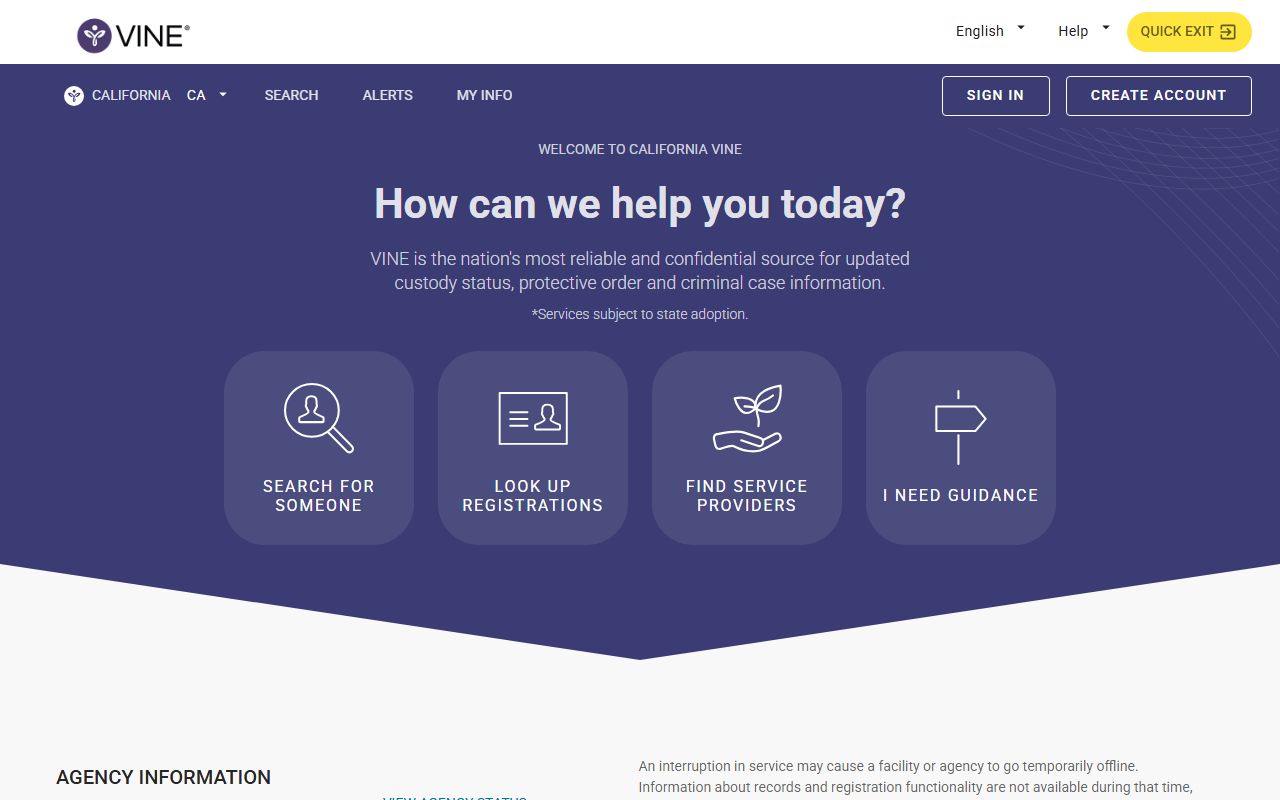
VINE supports custody and case notifications, but it should not be treated as a statewide mugshot source.
Note: The research does not support using commercial mugshot-publishing or pay-to-remove sites as a California records source.
California Booking Photo Fields
A roster photo is just one possible field in a booking record. County rosters can also show name, local identifiers, booking date, charges, bail, housing, facility, release status, or current holding location. CIRIS uses a different record model for state-prison custody, including CDCR number, age, current location, commitment counties, admission date, and Board of Parole Hearing information where applicable. Court records use still another model because they track filed charges, hearings, calendars, registers of action, and case documents.
| Record Field | What It Shows | Photo Caution |
|---|---|---|
| Booking photo | The intake image if the county roster or agency releases it. | May be absent, withheld, removed, or available only by request. |
| Name and local ID | The person's name plus booking number, local inmate ID, or related identifier. | A similar name is not enough to confirm identity. |
| Booking date | When the person entered local custody. | Does not prove that the person remains in custody. |
| Charge or arrest description | The booking or arrest information shown by the agency. | A booking charge is not the same as a conviction. |
| Bail or release status | Public local fields where the county publishes them. | Status can lag a court order, release, transfer, or data update. |
| Holding location | The jail, facility, or current holding location where shown. | May change after classification, transfer, sentencing, or release. |
Important: A roster image is a booking record field, not a statewide criminal history, court judgment, or proof of guilt.
Roster Photos vs Court Records
Jail mugshots and court records answer different questions. A roster photo, if published, documents a booking event created by the jail or arresting agency. A court record begins when charges are filed in the superior court. California has 58 superior courts, and California Courts guidance says each court is independently responsible for case records. Remote public access to criminal cases is limited in many situations, while fuller electronic records may require courthouse terminal access.
California Courts explains remote-access and courthouse-access limits in its electronic case records guide.
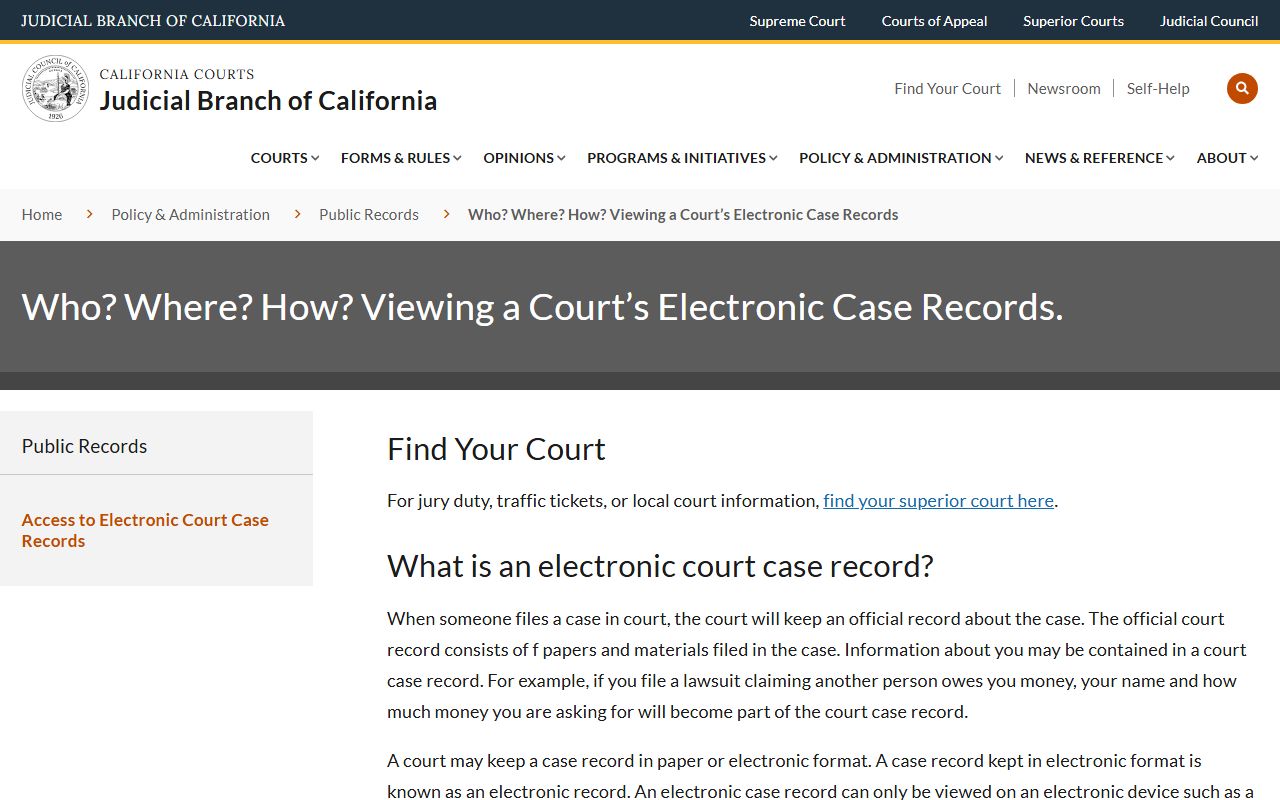
The court-access screenshot is relevant because a sealed, confidential, or non-remotely-accessible court record can affect what remains visible after a jail booking.
| Record Type | Owner | What It Can Show |
|---|---|---|
| Jail roster photo | County sheriff, city jail, or local corrections agency | Current or recent booking image when the agency publishes or releases it |
| Arrest information | State or local law-enforcement agency | Specified arrest facts under Government Code section 7923.610, subject to limits |
| Court case record | Superior court where the case was filed | Filed charges, calendars, indexes, registers of action, and documents when accessible |
| Summary criminal history | Authorized criminal-history agencies and local rules | Restricted history data, not a public mugshot roster |
A dismissed case, sealed record, confidential record, juvenile matter, or local criminal-history limit can change what is public. For filed charges and case status after a booking, use California court records after an arrest rather than relying on a photo or booking log alone.
State Prison Photo Limits
CDCR CIRIS is the statewide tool for California state-prison custody, but it is not a county mugshot gallery. CIRIS metadata says results include name, CDCR number, age, current location, commitment counties, admission date, and Board of Parole Hearing dates and outcomes. Those fields help identify a person in CDCR custody, but they do not replace a county booking-photo search or the local agency record that created the jail image.
The distinction is visible at CDCR CIRIS, the state-prison search source.
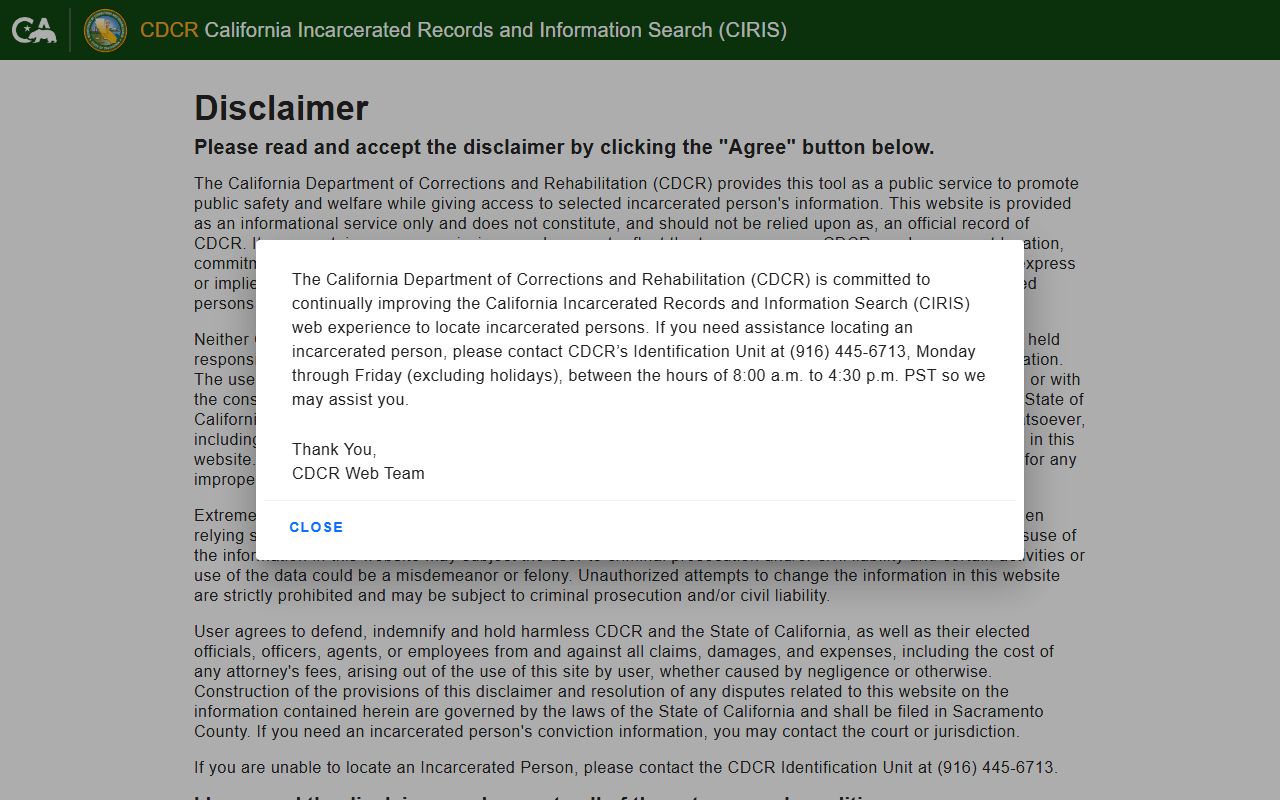
CIRIS belongs here because it shows the point where a person may leave county booking-photo lookup and enter state-prison records.
The same split applies to federal custody. The BOP locator covers federal inmates incarcerated from 1982 to present, supports number and name search, and warns that release dates may change as sentences are reviewed or recalculated. ICE ODLS covers civil immigration detention and uses immigration-specific identifiers such as an A-number or name with country of birth and birth date. Neither system is a California county mugshot roster.
Request California Mugshots
When a roster does not show a photo, the fallback is a request to the agency that owns the record. For county jail photos, that usually means the county sheriff, county corrections agency, city jail, or local public-records route identified by the county. The research warns against sending all jail-record requests to CDCR. CDCR public records are for CDCR records. County booking photos are local agency records unless the person has moved into CDCR custody and the requested material is a CDCR record.
CDCR routes statewide prison records through its Contact page and Public Records Portal.
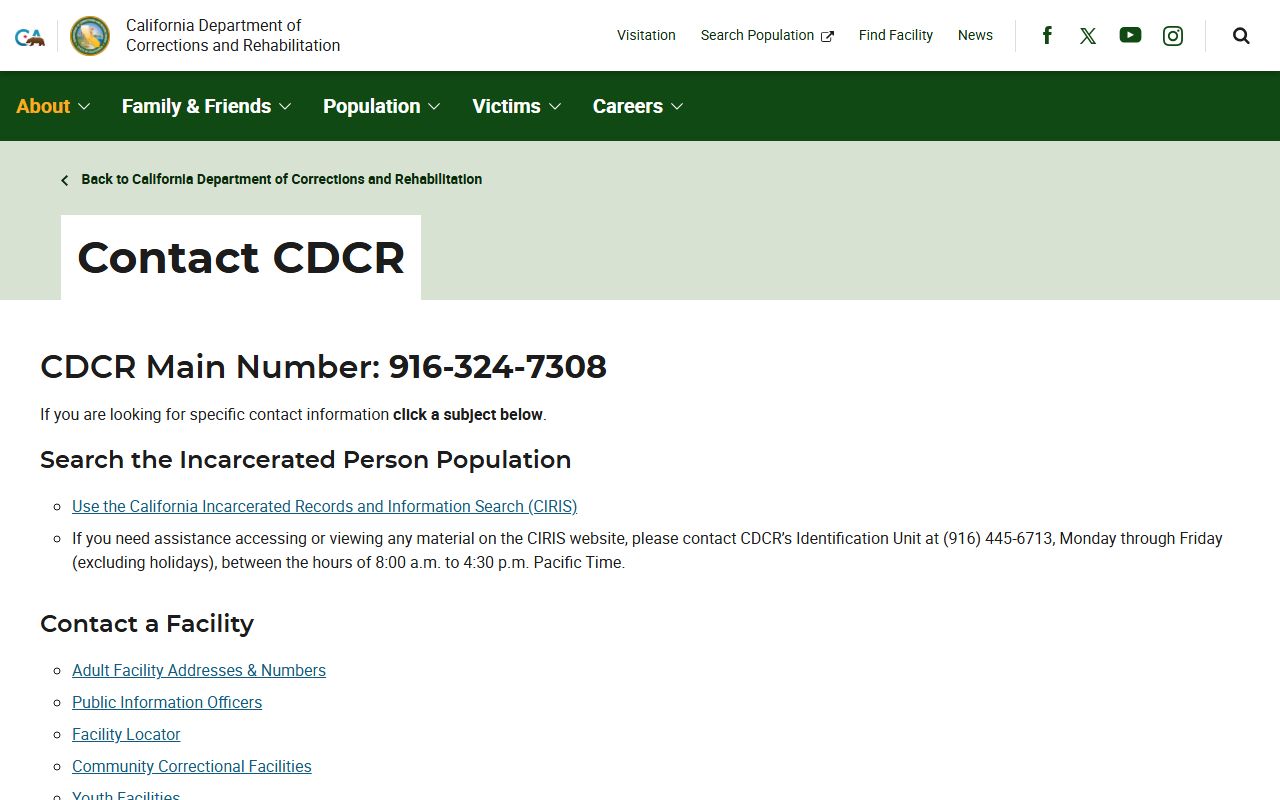
The CDCR public-records screenshot helps separate state-prison record requests from county booking-photo requests.
A local request should identify the person's full name, date range, booking agency, jail or facility, booking number if known, and the exact record sought. The agency may apply exemptions or limits for juvenile information, medical or mental-health information, victim details, sealed records, investigative records, security issues, or booking photographs. If the question is whether a photo should be removed after dismissal, sealing, or another court action, the responsible court and agency process controls the result.
Records boundary: Do not pay a commercial mugshot site to define California access rights. Use the official county, court, CDCR, BOP, ICE, or VINE route that owns the record.
California Mugshot Cautions
Booking photos are easy to misuse because they look final when they may only reflect intake. A photo does not show whether charges were filed, reduced, dismissed, sealed, or resolved. A county roster does not show full statewide criminal history. A court portal may omit sealed, confidential, juvenile, or non-remotely-accessible files. A state-prison result means CDCR custody, not local booking custody. A federal or immigration result belongs to BOP or ICE, not a California county jail.
For the current custody and roster side, use California inmate records to separate county jail, CDCR, BOP, ICE, and VINE channels before relying on any photo field.
California jail mugshot access is most accurate when the search stays factual: identify the agency, read the visible roster fields, request the specific record if needed, and verify court status separately. No commercial mugshot-publishing or pay-to-remove source is needed to complete that official records path.
Public Record Search
Sponsored Results