
California Court Records After Arrest
A jail roster shows booking custody; a court record shows filed charges, hearings, filings, and case status. The two can differ because booking charges may be amended, reduced, dismissed, or replaced by the prosecutor's filing. In California, the arrest-to-court path usually moves from law enforcement booking, to jail custody or release, to a prosecutor's charging decision, and then to the superior court that opens the case file. The words on a roster are not the final charge history.
California Courts explains the statewide remote-access and courthouse-access framework in its electronic case records guide.
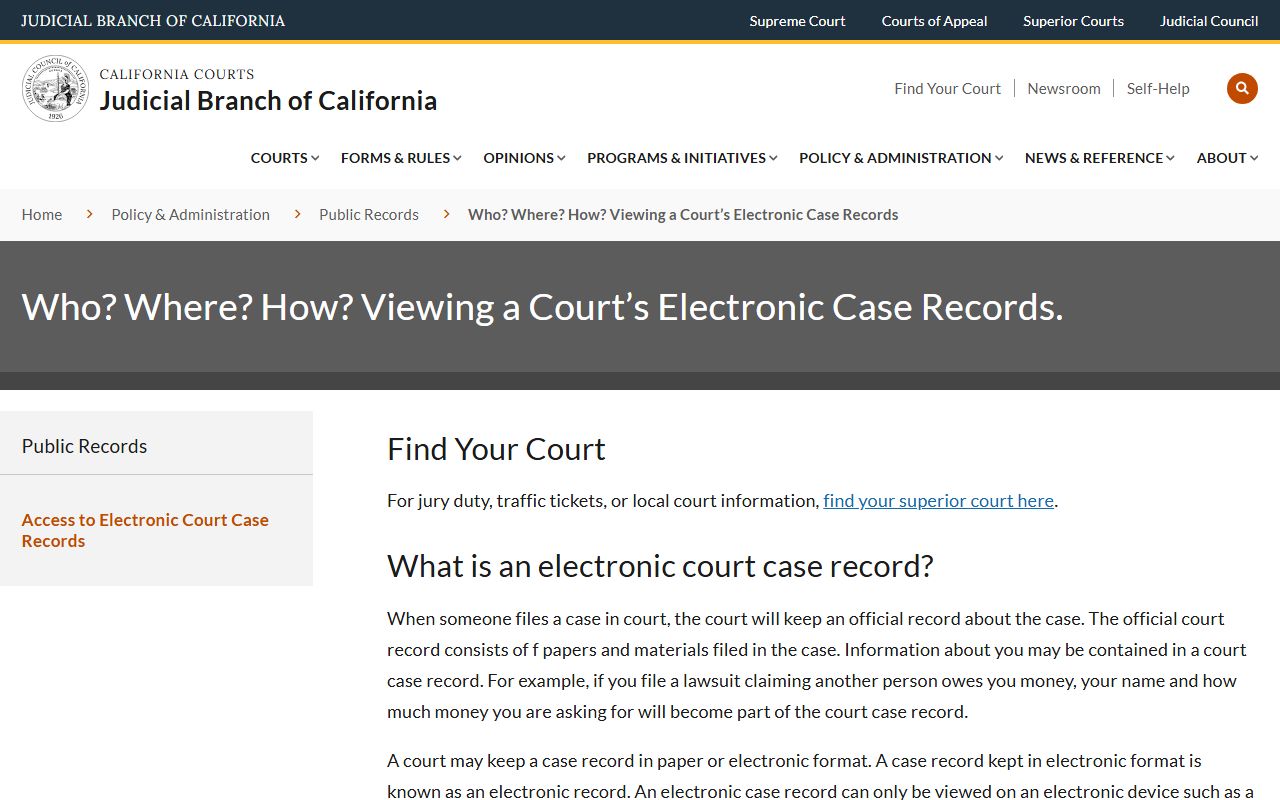
The court guide image fits here because it shows the statewide access rules that apply after an arrest becomes a court case.
The research separates court access from inmate search because the agencies are different. A sheriff, jail, police department, CDCR, BOP, or ICE source may tell where a person is held. A California superior court record answers what case was filed, what hearings are set, whether a charge remains pending, and whether a disposition has been entered. The court file may also be limited by confidentiality, sealing, juvenile rules, or remote-access rules, so a missing online result is not always proof that no case exists.
California Superior Court Records
California has 58 superior courts, one in each county, plus Courts of Appeal and the Supreme Court. California Courts guidance says case-record requests must go to the court where the case is filed. That county-specific rule is the key to California court records after a jail arrest. The county of arrest, the booking jail, and the filing court are often the same county, but transfers and agency holds can make the path less direct.
For participating courts, re:SearchCA provides a multi-county Tyler court records portal.
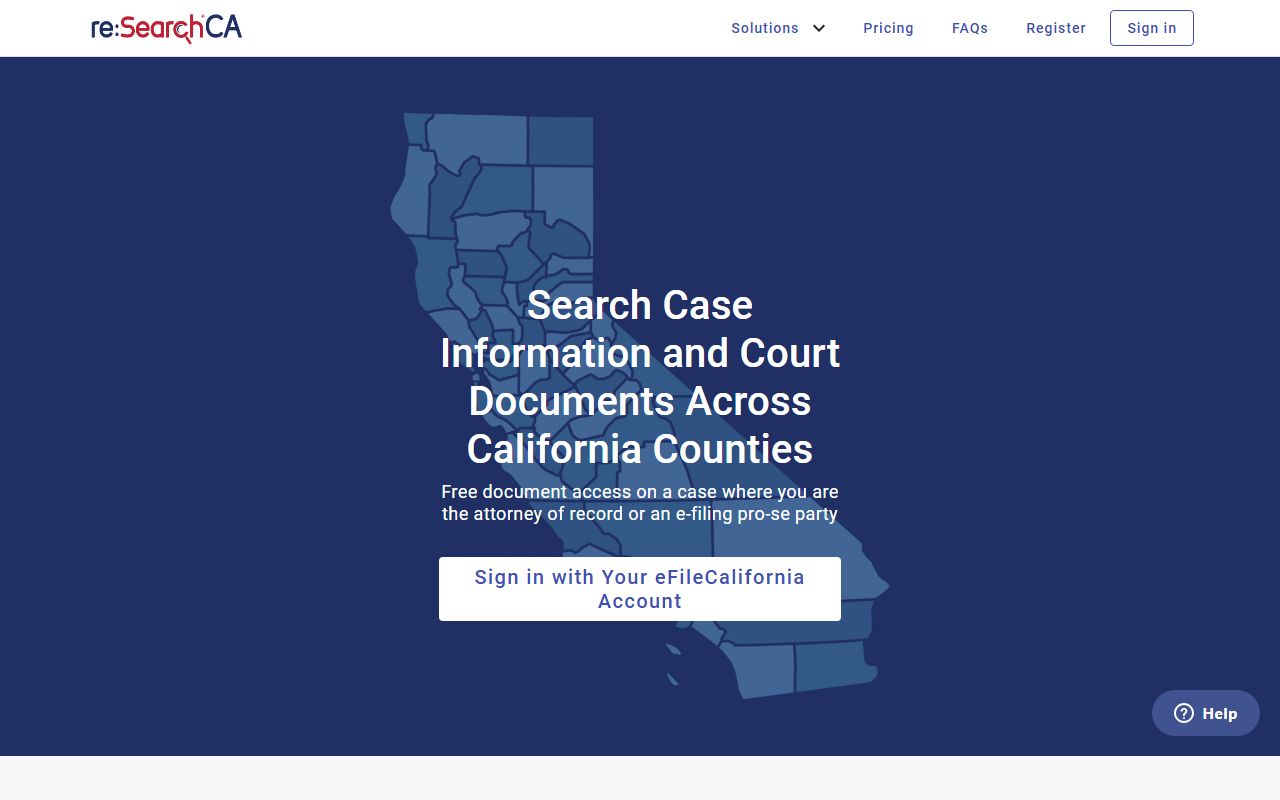
This image supports the page's warning that re:SearchCA is useful but not a complete statewide criminal court search for every county.
When re:SearchCA does not return a match, the next step is the superior court's own case index or records office. Some courts expose public calendars or registers of action. Others require a courthouse terminal for more detail. California Courts' public-records guidance also distinguishes judicial administrative records from case records, so a request for a criminal case file should go to the court that filed the case rather than to a statewide administrative office.
Search California Arrest Court Records
Use the custody record to locate the court path. A current roster may show arrest date, booking agency, charge text, bail, or court date. Those fields can point to the county where a complaint, information, or indictment may later appear. For statewide California inmate records, a CDCR or BOP result may list a commitment county or federal custody, but it will not replace the superior court docket.
- Identify the county where charges were filed or where the jail booking occurred.
- Use that superior court's online index, courthouse terminal, calendar, or records office.
- Use re:SearchCA when the county participates and the record is available there.
- Compare jail charges with the prosecutor-filed court charges before treating the record as final.
- Expect remote criminal access to be limited to registers of action, calendars, and indexes in many situations.
| Search field | Where it may appear | Use |
|---|---|---|
| Name | County court index or re:SearchCA | Broad case lookup when case number is unknown. |
| Case number | Court docket, citation, or minute order | Most direct court-record search key. |
| Hearing date | Court calendar or jail roster | Confirms the court branch and pending appearance. |
| Booking or arrest date | Jail roster or booking log | Helps match the custody event to a later court case. |
California Remote Access Limits
California Courts guidance distinguishes courthouse terminal access from remote access. Some records are confidential or sealed, and remote public access to criminal records is usually narrower than in-person courthouse access. That is why a courthouse terminal can matter even when a court has a public website. A remote user may see an index, register of action, or calendar while a clerk's office or terminal provides the proper method for viewing more records that are public but not remotely posted.
The arrest-information disclosure statute is published by the Legislature at Government Code section 7923.610.
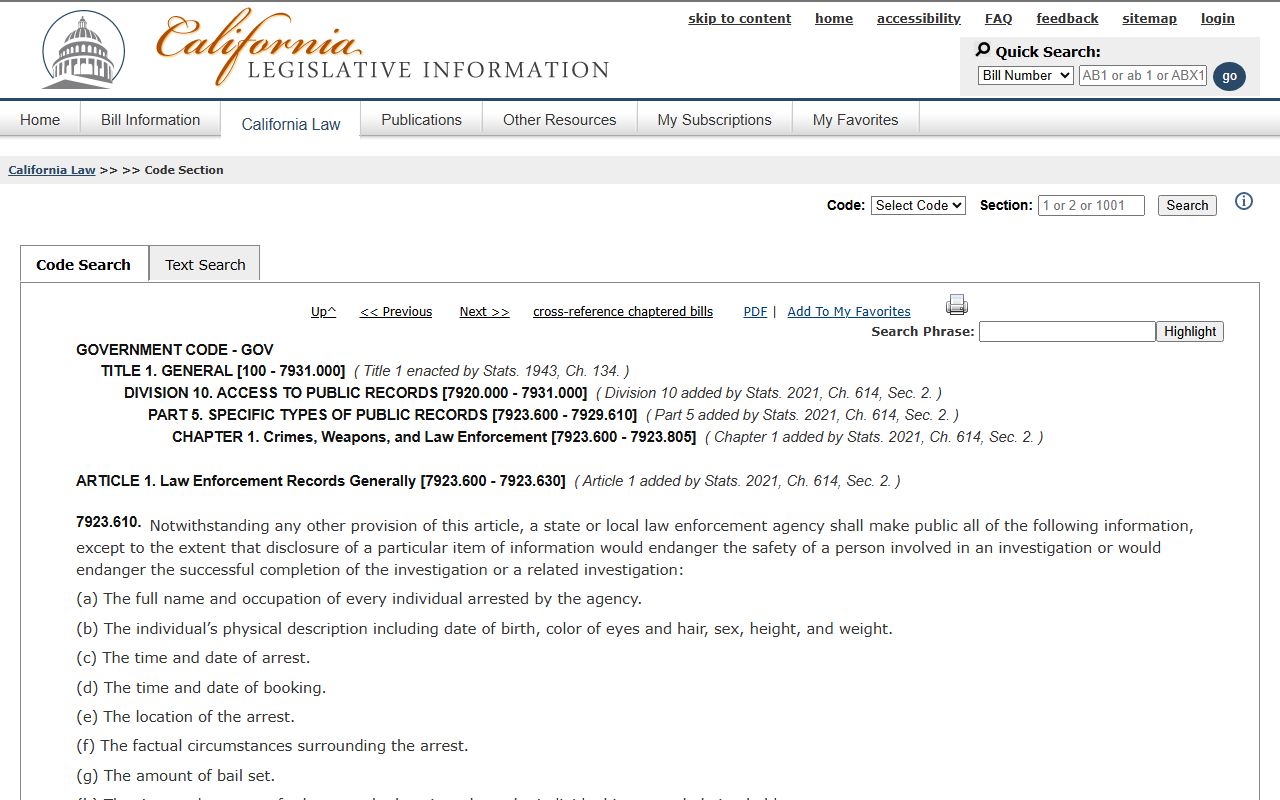
The statute image helps separate public arrest information from court records that may be sealed, confidential, or limited by remote-access rules.
Access point: public arrest information, jail custody information, and court case records are related, but each comes from a different source and may have different public limits.
Charges, Bail, and Case Status
California research did not supply a statewide bail schedule or a single charge-status vocabulary. Treat jail charges as booking information and court charges as the prosecutor-filed case record. Confirm case status with the superior court that owns the file. Bail or release terms can change as the case moves from booking to arraignment, and the jail record may lag the court record or vice versa.
Custody and case notifications may also be available through California VINE.

VINE is included here as a notification channel, not as a replacement for superior court case records.
| Record type | What it means | Where to verify |
|---|---|---|
| Complaint | A charging document that begins many criminal cases. | Superior court where filed. |
| Information | A prosecutor-filed charging document after required proceedings. | Superior court docket and clerk records. |
| Indictment | A grand-jury charging document when used. | Superior court case file. |
Charge vs. Conviction
A charge is an accusation in a filed case. A conviction is an outcome after plea, verdict, or judgment. California court records after a jail arrest should be read with that difference in mind because a booking entry or early complaint can change. The court record may show dismissal, amendment, reduced counts, deferred proceedings, or a final conviction. A jail roster should not be used as proof of conviction.
| Term | Meaning | Reader check |
|---|---|---|
| Arrest | Law-enforcement custody event. | Check jail roster or arrest-information source. |
| Filed charge | Prosecutor accusation in court. | Check superior court case records. |
| Conviction | Final finding or plea accepted by the court. | Check disposition and judgment entries. |
| Dismissal | A charge or case is ended without conviction on that count. | Check docket text and orders. |
Sealed and expunged records add another layer. A sealed record may be restricted from public view. Expungement and related relief can alter how a case appears, but the exact effect depends on the court order and record type. Use the court that owns the case for public access questions, and use official criminal-history channels where the research points to Penal Code section 13300 limits.
California court records after arrest also have a timing problem. The jail may show a person in custody before the superior court has posted a case, and a court may show a case after the person is released or transferred. If the issue is custody status, use the jail, CDCR, BOP, ICE, or VINE source that matches the holding agency. If the issue is a filed charge, hearing, order, disposition, or sealed-record question, use the superior court that owns the file.